

When we talk about diabetes, most people immediately think about blood sugar. But in my clinical practice, I often remind my patients that diabetes is not just a sugar problem—it is a condition that can affect the heart, blood vessels and kidneys over time.
One of the most important complications of long-standing diabetes is chronic kidney disease (CKD). High blood pressure can further accelerate kidney damage. The concerning part is that kidney disease can progress silently, without obvious symptoms, until significant damage has already occurred.
This is why modern diabetes care is not simply about bringing HbA1c down. We need to look at the complete picture—blood sugar, blood pressure, cholesterol, kidney function, urine protein, body weight, medications, lifestyle and cardiovascular risk.
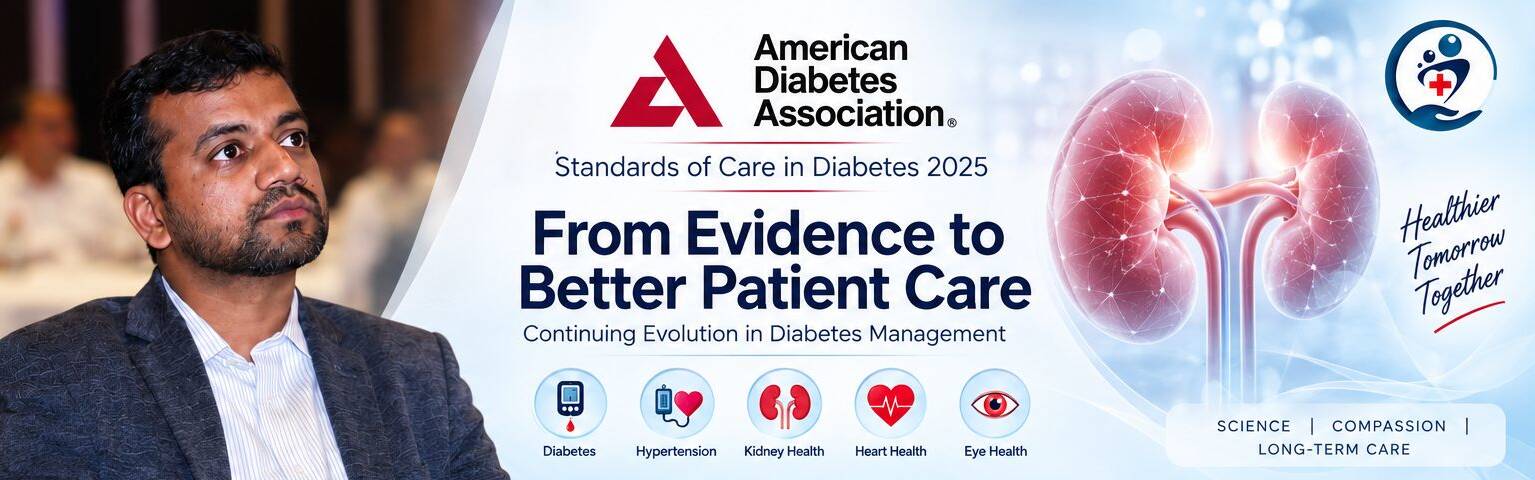
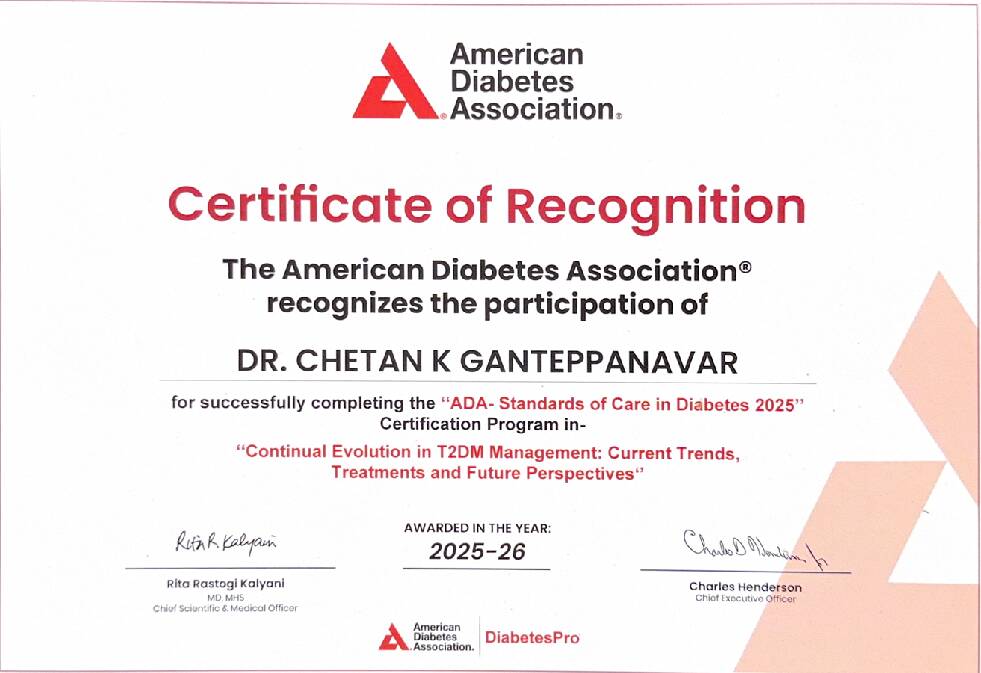
I recently participated in the American Diabetes Association (ADA) Standards of Care in Diabetes 2025 program, focused on the continuing evolution of Type 2 diabetes management, current treatment approaches and future perspectives. This experience reinforced an important principle: diabetes treatment must evolve with scientific evidence, while remaining personalised to every patient.
My approach as a Consultant Physician and Diabetologist is to identify risks early, explain them in simple language and create a treatment plan that patients can realistically follow for the long term.
If you have diabetes, high BP, abnormal kidney function, protein in urine, or a family history of kidney disease, don’t wait for symptoms. Regular evaluation can help identify problems early and allow appropriate treatment.
Good diabetes care is not only about controlling today’s sugar. It is about protecting your heart, kidneys and health for tomorrow.
Dr. Chetan K. Ganteppanavar, MBBS, MD, DNB
Consultant Physician & Diabetologist
Kalpana Multispeciality Clinic, Hubballi
📞 81471 48724