

A 45-year-old daily-wage worker, severe anaemia, repeated urinary infections and a hidden problem that almost went unnoticed. A clinical story about why finding the cause matters more than simply treating the symptoms. Sometimes, the most important part of treating a patient is not prescribing a medicine. It is asking one more question, ordering the right investigation and looking beyond the symptoms.
This is the story of a 45-year-old man who came to my clinic hoping for some medicines and injections to regain his strength. But what we eventually discovered was something he and his family had never imagined.
“Sir, I am feeling very weak. Please give me something to improve my blood.”
He was a 45-year-old daily-wage labourer. His work involved considerable physical effort, but for several months, he had been struggling.
He complained of:
* Severe weakness and reduced energy to work.
* Body pain, neck pain and hand pain.
* Difficulty passing urine.
* Burning sensation while urinating.
* Reduced ability to perform his daily activities.
He had already visited several local clinics and taken medicines, but his condition had not improved significantly.
Recently, he had undergone a blood test. The report showed something alarming. His haemoglobin was just 4.7 g/dL! Such a low level indicates severe anaemia and requires urgent medical attention. His urine examination also showed signs of infection.
He came to me with a simple request: “Sir, please give me some tonics and injections to increase my blood. Also give me antibiotics for my urine infection.”
But something was not adding up. A simple urinary infection? Or something more? Before prescribing medicines, I wanted to understand why a 45-year-old man had developed such severe anaemia along with urinary infection and persistent urinary complaints.
Was it simply a nutritional problem? Was tobacco or alcohol contributing to his health problems? Or was there something more serious happening inside his body?
I explained to the family that simply giving iron supplements, blood transfusions or antibiotics without investigating the underlying cause could leave the actual problem untreated.
However, there was another challenge. The family was financially struggling. His wife worked as a house cleaner, going from one home to another to earn a living. His son drove a rented auto-rickshaw to support the family. The patient himself depended on daily-wage labour. Naturally, they were worried about the cost of further investigations.
Initially, they were hesitant. But after explaining why these tests were important and what we were trying to identify, they finally agreed. And that decision changed the entire course of his treatment.
The blood tests revealed another warning sign. We proceeded with a more detailed evaluation.
The results revealed several abnormalities:
* Creatinine: 3.5 mg/dL – significantly raised, indicating impaired kidney function.
* CRP: Significantly elevated – suggesting considerable inflammation or infection.
* Liver function tests: Evidence of mild liver abnormalities.
* Haemoglobin: 4.7 g/dL – severe anaemia.
Creatinine is a blood marker used to assess kidney function. A significant increase suggests that the kidneys are not filtering waste products effectively. Now the situation was much more concerning. He had urinary symptoms, evidence of infection, severe anaemia and impaired kidney function.
I explained to the family that we needed to look inside the abdomen and urinary system to find out what was causing these problems. We advised an ultrasound examination of the abdomen.
The unexpected discovery: A large stone inside the urinary bladder!
The ultrasound revealed something we had not expected. There was a large stone inside his urinary bladder!
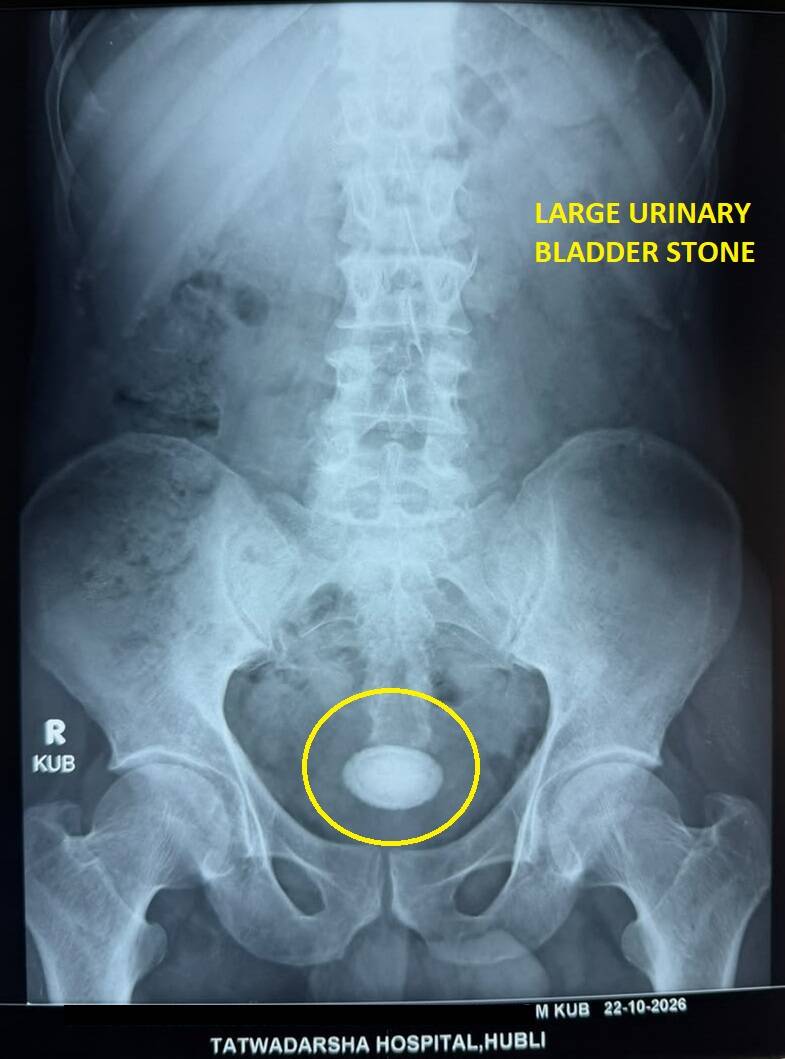
A bladder stone is a hard deposit that forms when minerals in urine collect and become solid. This was not a small stone that could simply pass out with urine. It was large enough to cause irritation and contribute to urinary symptoms and recurrent infection.
We further evaluated the stone with an X-ray KUB (Kidney, Ureter and Bladder), which helped demonstrate its location and radiological appearance.
The family was shocked. They had come expecting medicines for weakness and urinary infection. Now they were looking at an entirely different problem that required surgical treatment.
But there was one more important question. Why had such a large stone formed in the first place? The second problem hidden behind the first!
The patient was admitted for urological intervention to Tatwadarsha Hospital, Hubballi.
With the support of Dr. Pavan Joshi, Urologist, the patient underwent surgical treatment for removal of the bladder stone. During the procedure, another important finding emerged. There was a narrowing of the urethra, medically known as urethral stricture. The urethra is the tube through which urine passes out of the body.
When this passage becomes abnormally narrow, urine flow can become difficult. Poor urinary drainage and obstruction can contribute to recurrent infections and bladder stone formation.
The narrowing was also addressed during the surgical procedure. The patient received blood transfusions for his dangerously low haemoglobin and appropriate antibiotics based on urine culture findings. He was discharged after three days with a urinary catheter in place, which was planned to remain for four weeks, along with instructions for regular urological follow-up. The recovery that made all the effort worthwhile!
CLICK HERE FOR --> VIDEO OF REMOVED BLADDER STONE
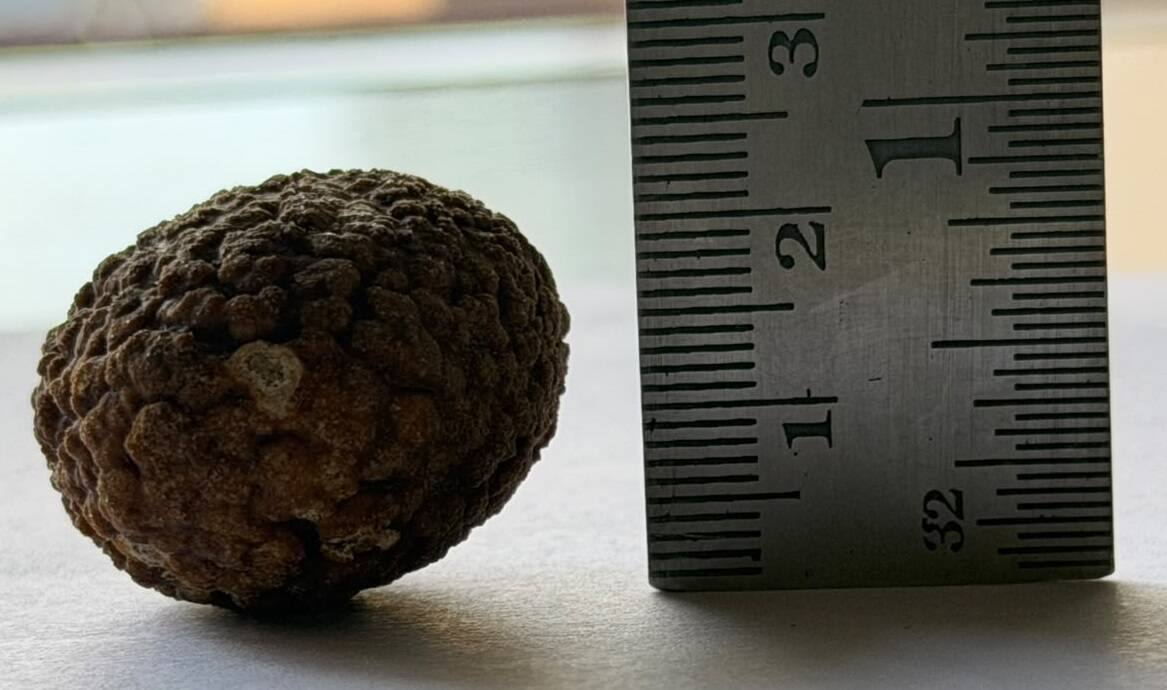
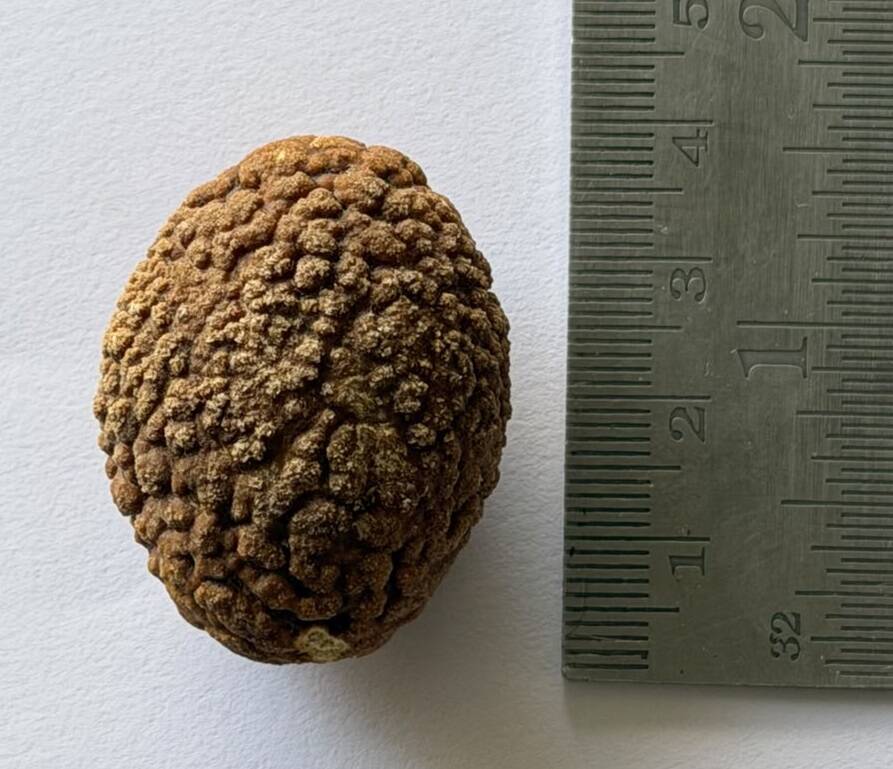
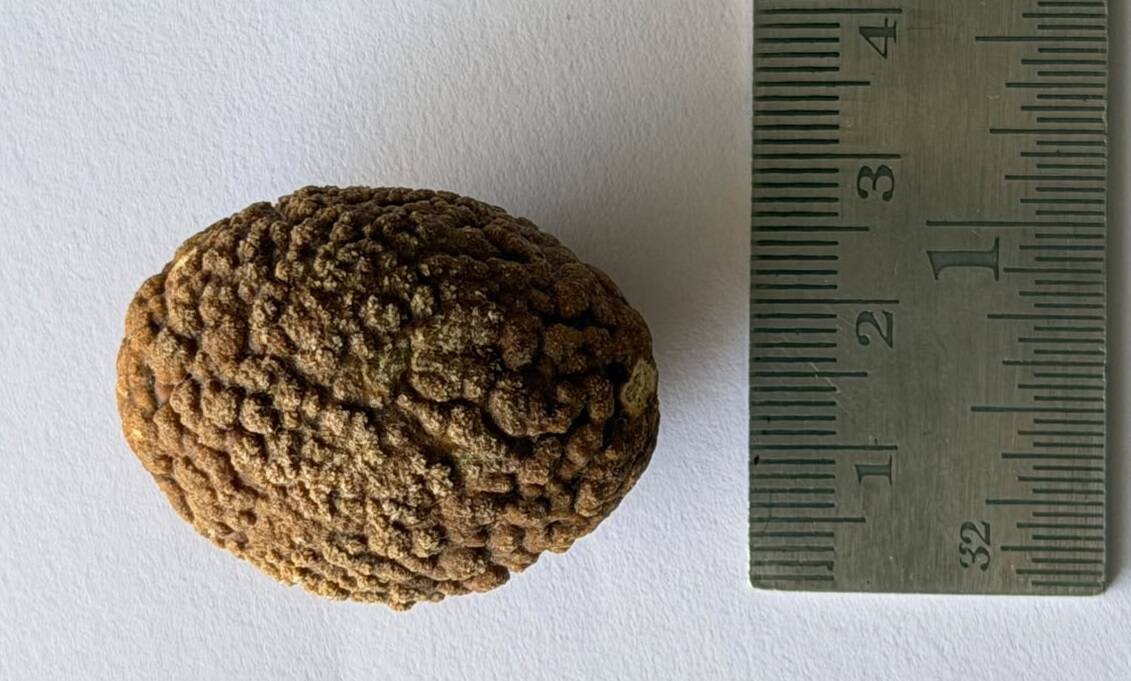
The real happiness came during follow-up.
Within approximately one and a half weeks, his creatinine had improved from 3.5 to 2.0 mg/dL. His appetite improved. His energy levels increased. He started feeling healthier and was able to perform his daily activities much better than before. He was also counselled regarding stopping tobacco use and alcohol consumption, improving his nutrition and maintaining regular follow-up with both his urologist and physician.
His recovery was encouraging, although continued monitoring of kidney function and anaemia remained important.
What can we learn from this story? There are some very important lessons for everyone.
1. Never ignore persistent urinary symptoms.
Burning urination, difficulty passing urine, poor urine flow and recurrent urinary infections should never be repeatedly treated with antibiotics without investigating the underlying cause.
2. Severe anaemia is not just a matter of taking iron tablets.
When haemoglobin is very low, doctors must investigate why it has fallen. Nutritional deficiencies, blood loss, kidney disease and several other conditions can contribute to anaemia. Blood transfusion may be urgently necessary, but identifying the underlying cause is equally important.
3. Kidney damage can sometimes begin with problems in the urinary passage.
A urinary obstruction caused by stones or narrowing of the urinary tract can affect kidney function. Early recognition and treatment can help prevent further damage.
4. Investigations are not always unnecessary expenses.
Sometimes, a blood test, urine examination or ultrasound can reveal a problem that would otherwise remain hidden. The purpose is not to order more tests, but to order the right tests for the right patient.
One message I want every patient to understand
When your doctor advises additional investigations, please do not immediately assume that they are unnecessary or that the doctor is simply prescribing too many tests.
A good doctor does not want to treat your symptoms today and see you return with the same problem tomorrow.
The intention is to understand why the problem started, identify its underlying cause and treat it appropriately.
- If someone has anaemia, we want to know why the haemoglobin has fallen.
- If someone has a urinary infection, we want to know why the infection has occurred.
- If someone’s creatinine is elevated, we want to know what is affecting the kidneys.
- Treating the symptoms may provide temporary relief. Finding and treating the cause can change the patient’s future.
- This patient’s story is a reminder that sometimes, one additional investigation can make a life-changing difference.
Don’t just treat the symptoms. Find the cause. Understand the disease. Treat it at the root.
— Dr. Chetan K. Ganteppanavar
Consultant Physician & Diabetologist
Kalpana Multispeciality Clinic, Hubballi